



Monument Sign vs. Pylon Sign: Which Commercial Monument Signs Solution Is Right for Your Atlanta Business?

Choosing the right sign affects how easily customers find you, how your property looks, and whether you meet local code. This article compares commercial monument signs and pylon signs for Atlanta businesses.
What Is a Monument Sign?
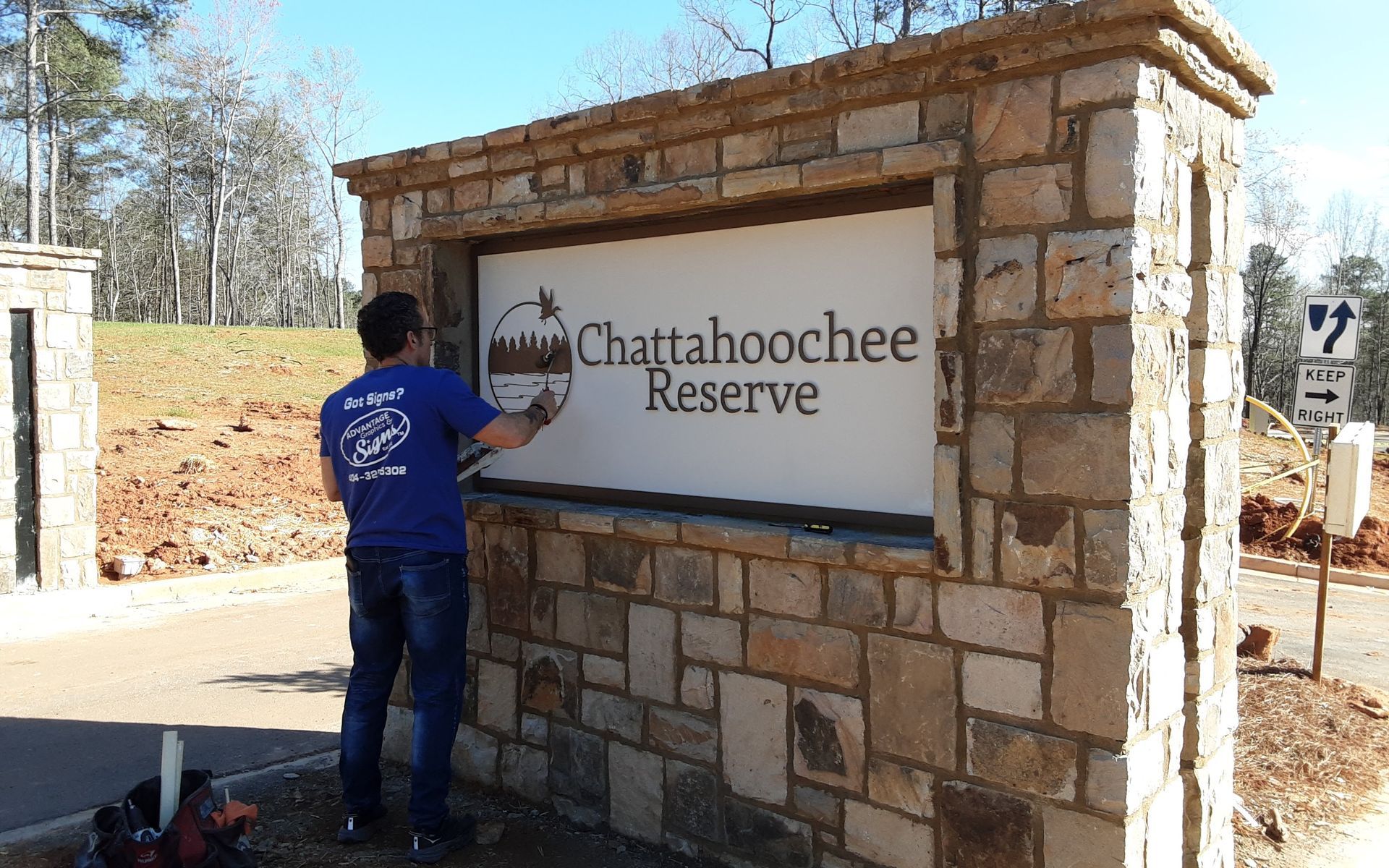
A monument sign is a freestanding structure that rises directly from the ground with no visible poles or gaps beneath the sign cabinet. They are permanent, freestanding, and built with continuous solid construction.
Because of their solid base, commercial monument signs look polished and permanent. They work especially well where curb appeal matters: office parks, medical campuses, upscale retail centers, and residential communities. In Atlanta, they are popular along Peachtree Road and Roswell Road and throughout Buckhead and Sandy Springs.
What Is a Pylon Sign?
A pylon sign rises higher and relies on visible support poles. Pylon signs are tall, freestanding structures mounted on one or two poles, designed to be seen from a distance. They are common at shopping centers, gas stations, fast-food restaurants, and multi-tenant commercial strips where drivers need to spot businesses from a moving vehicle at highway speeds.
Pylon signs typically range from 10 to 50-plus feet in height, while monument signs usually fall in the 3-to-8-foot range. Pylon signs offer visibility from a quarter-mile or more, while monument signs are generally readable from 200 to 500 feet.
How Do Atlanta Zoning Rules Affect Each Sign Type?
Atlanta sign regulations shape which sign type fits your property. The City's Sign Ordinance, enacted in October 2003, amends Part 16 of the 1982 Atlanta Zoning Ordinance. Key rules include:
▸ Freestanding signs must be placed 10 or more feet from the nearest wall of a principal structure and cannot exceed 24 feet in height from ground level.
▸ Most municipalities cap commercial monument sign height at 6 to 8 feet above grade, though some commercial zones allow up to 10 to 12 feet.
▸ Residential-adjacent zones may prohibit pylon signs entirely.
▸ Ground sign permits must include engineered structural drawings stamped by a Georgia-registered professional engineer for signs above a certain size.
Our team can help you navigate sign permitting and regulatory compliance before your project gets underway.
Monument Sign vs. Pylon Sign: Which One Fits Your Business?
The best sign type depends on your property type, road speed, and visibility goals.
Monument Signs Work Best For:
▸ Office parks and corporate campuses that need a professional, architectural look.
▸ Medical centers where a calm, permanent appearance builds trust.
▸ Neighborhood shopping centers in areas like Decatur, Dunwoody, or Midtown Atlanta where local codes favor lower-profile signage.
▸ Apartment communities and mixed-use developments reinforcing property branding.
▸ Churches and schools along lower-speed residential corridors.
Pylon Signs Work Best For:
▸ High-traffic corridors and highway-adjacent retail where maximum visibility is the priority.
▸ Multi-tenant strip centers where multiple businesses share one sign structure with changeable tenant panels.
▸ Gas stations, quick-service restaurants, and auto-related businesses along busy arterials like I-285 or I-20.
▸ Properties set far back from the road, where a taller structure compensates for the distance.
What About Cost?
Fabrication, materials, structural engineering, and permitting all factor into the final price, so costs vary widely by size, material, and complexity. Whether you are considering commercial monument signs or pylon signs, the better approach is to request a sign quote so you get a number based on your actual site and design requirements.
Can a Monument Sign Be Illuminated?
Yes. Commercial monument signs can include internal illumination, LED lighting, or an electronic message board. Illuminated monument signs offer day-and-night visibility without pylon-level height, staying within local height limits.
Do I Need a Permit for Either Sign Type?
Yes. Both monument signs and pylon signs require permits in Atlanta, GA. Ground sign permits require structural drawings showing foundation design, wind load calculations per ASCE 7, and material specifications. Working with an experienced local sign company helps ensure your project moves through permitting without costly delays.
What Factors Should I Consider When Choosing Between the Two?
Consider road speed and setback first. If your building sits close to a slower street, a monument sign may provide all the visibility you need. If you are set back from a high-speed road or need to compete for attention in a busy commercial corridor, a pylon sign may serve you better. Local zoning, neighborhood design standards, and property type should all factor into the final decision.
Ready to Find the Right Sign for Your Atlanta Property?
Advantage Graphics & Signs has been serving Atlanta, GA, businesses for over 30 years, helping owners across Buckhead, Midtown, and Dunwoody find the right sign solutions for their properties. Call (404) 325-5302 or visit the contact page to schedule your free consultation. You can also find Advantage Graphics & Signs on Google to read reviews and get directions.